On Fri, 3/13/2026 7:27 AM, Tom Elam wrote:
W11 pushed me to Apple Mac.
As a former Apple user, somehow I don't think this solves any problems as such.
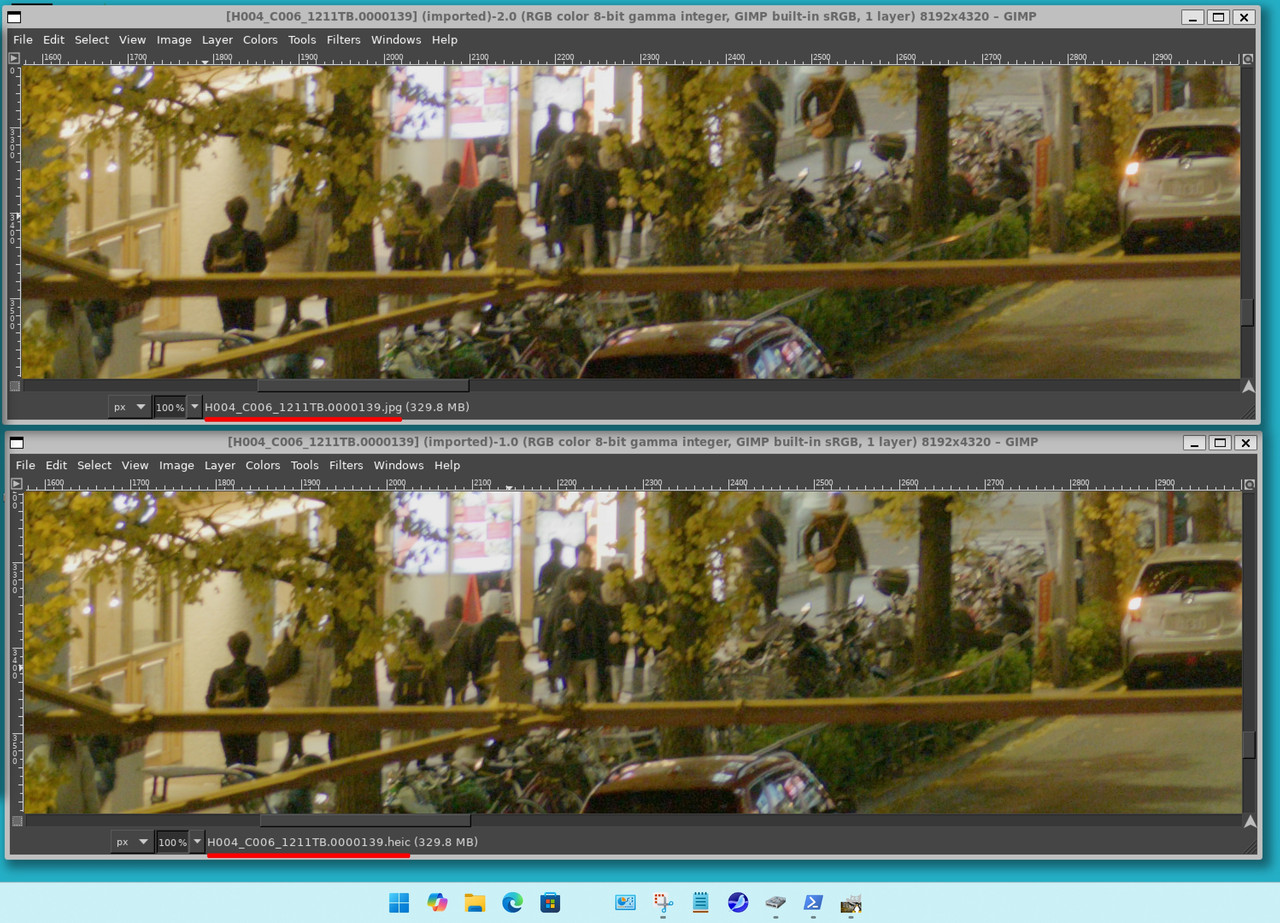
It's just a new set of problems. Here, have an HEVC and a HEIC we don't
need, they're "free". You would think the joy of spinning things
we don't need would have ceased in a world with standards but... well...
The more Apple can make life miserable for Apple owners who want to interoperate with other platforms, the better it is for Apple profits.
Farley Flud wrote:
The more Apple can make life miserable for Apple owners who want to
interoperate with other platforms, the better it is for Apple profits.
That's the name of the game for all commercial software companies and
commercial companies in general.
Unless governments enact a legal obligation to adhere to adopted standards >> there will be only FOSS to ensure interoperability.
I don't disagree that *every* company would love to garner the type of profits Apple fleeces its customers by locking them into their own prison.
For example, Google is following Apple's lead by requiring developers to be approved by Google before people can load their APKs onto their devices.
And while Apple is the only common consumer operating system where you essentially must have a privacy-robbing mothership account, Microsoft is adamant in trying to follow Apple's lead in Windows 11 "requiring" the MSA.
The thing about Apple is that while nobody believes that Microsoft or
Google "care" about them, the Apple owner actually believes the propaganda.
Apple's profit-making strategy hinges on making life miserable for any
Apple owner who also owns alternative devices and yet, the Apple owner is always boastful when they can finally do what everyone else already does.
That's how fantastically brilliant Apple marketing propaganda truly is.
On 2026-03-13 21:10, Maria Sophia wrote:
Farley Flud wrote:
The more Apple can make life miserable for Apple owners who want to
interoperate with other platforms, the better it is for Apple profits. >>>>
That's the name of the game for all commercial software companies and
commercial companies in general.
Unless governments enact a legal obligation to adhere to adopted standards >>> there will be only FOSS to ensure interoperability.
I don't disagree that *every* company would love to garner the type of
profits Apple fleeces its customers by locking them into their own prison. >>
For example, Google is following Apple's lead by requiring developers to be >> approved by Google before people can load their APKs onto their devices.
And while Apple is the only common consumer operating system where you
essentially must have a privacy-robbing mothership account, Microsoft is
adamant in trying to follow Apple's lead in Windows 11 "requiring" the MSA. >>
The thing about Apple is that while nobody believes that Microsoft or
Google "care" about them, the Apple owner actually believes the propaganda. >>
Apple's profit-making strategy hinges on making life miserable for any
Apple owner who also owns alternative devices and yet, the Apple owner is
always boastful when they can finally do what everyone else already does.
That's how fantastically brilliant Apple marketing propaganda truly is.
I notice that nothing you wrote has anything to do with the subject of
this thread...
Like MPEG-4 is better than MPEG-1 and MPEG-2, the HEIF standards are
better than JPEG. HEIC especially shines on smartphones with some video
On 3/14/2026 4:02 AM, Lars Poulsen wrote:
Like MPEG-4 is better than MPEG-1 and MPEG-2, the HEIF standards are
better than JPEG. HEIC especially shines on smartphones with some video
Come on, all raw (un-compressed) formats are better than JPEG because
JPEG and MP3 compresses using Fourier Transform!!
Farley Flud wrote:
The more Apple can make life miserable for Apple owners who want to
interoperate with other platforms, the better it is for Apple profits.
That's the name of the game for all commercial software companies and
commercial companies in general.
Unless governments enact a legal obligation to adhere to adopted standards >> there will be only FOSS to ensure interoperability.
I don't disagree that *every* company would love to garner the type of profits Apple fleeces its customers by locking them into their own prison.
For example, Google is following Apple's lead by requiring developers to be approved by Google before people can load their APKs onto their devices.
And while Apple is the only common consumer operating system where you essentially must have a privacy-robbing mothership account, Microsoft is adamant in trying to follow Apple's lead in Windows 11 "requiring" the MSA.
The thing about Apple is that while nobody believes that Microsoft or
Google "care" about them, the Apple owner actually believes the propaganda.
Apple's profit-making strategy hinges on making life miserable for any
Apple owner who also owns alternative devices and yet, the Apple owner is always boastful when they can finally do what everyone else already does.
That's how fantastically brilliant Apple marketing propaganda truly is.
On 03/14/2026 6:16 AM, Mr. Man-wai Chang wrote:
On 3/14/2026 4:02 AM, Lars Poulsen wrote:This is something I have never understood. Why are GB's of pixel needed
Like MPEG-4 is better than MPEG-1 and MPEG-2, the HEIF standards are
better than JPEG. HEIC especially shines on smartphones with some video
Come on, all raw (un-compressed) formats are better than JPEG because
JPEG and MP3 compresses using Fourier Transform!!
to create a good image on a screen that only displays MB's of pixel.
Even with the zoom factor, it still is beyond my me.
...
My experience with Apple users is that they often do things I would
never have imagined, and that they mostly take this advanced
functionality for granted. I'm sure that a lot of the tasks they
accomplish without a thought can be done on Android, on Windows or on
Linux, but users of the latter three are often unaware that they can do
such things. Meanwhile, even the most ignorant Apple user does them
without even realizing how advanced the functionality is.
I imagine that
it's because Apple does a better job of informing you about the functionality and teaching you how to use it, whereas the others take a passive approach and either assume that the user already knows or that
they will actively figure it out.
Which is better to empower a user?
Like MPEG-4 is better than MPEG-1 and MPEG-2, the HEIF standards are
better than JPEG. HEIC especially shines on smartphones with some video editing in the camera app. Where JPEG files contain a single image, an
HEIC file can contain "a sequence of images", which the iPhone can use
to keep a pre-edit and a post-edit of a photo. "Live" photos get
On 03/14/2026 6:16 AM, Mr. Man-wai Chang wrote:
On 3/14/2026 4:02 AM, Lars Poulsen wrote:This is something I have never understood.˙
Like MPEG-4 is better than MPEG-1 and MPEG-2, the HEIF standards are
better than JPEG. HEIC especially shines on smartphones with some video
Come on, all raw (un-compressed) formats are better than JPEG because JPEG and MP3 compresses using Fourier Transform!!
Why are GB's of pixel needed to create a good image on a screen
that only displays MB's of pixel. Even with the zoom factor, it
still is beyond my˙ me.
What Fourier Transeform removed/compressed is the parts that human eyes
and ears can barely see or hear! :)
On 3/14/2026 4:02 AM, Lars Poulsen wrote:
Like MPEG-4 is better than MPEG-1 and MPEG-2, the HEIF standards are
better than JPEG. HEIC especially shines on smartphones with some video
editing in the camera app. Where JPEG files contain a single image, an
HEIC file can contain "a sequence of images", which the iPhone can use
to keep a pre-edit and a post-edit of a photo. "Live" photos get
One more thing:
Apple iPhone's new dynamic way of taking photoes is NOT taking a photo,
but a series of photos, which is actually a video!! :)
On 3/14/26 08:14, CrudeSausage wrote:
...
My experience with Apple users is that they often do things I would never have imagined, and that they mostly take this advanced functionality for granted. I'm sure that a lot of the tasks they accomplish without a thought can be done on Android, on Windows or on Linux, but users of the latter three are often unaware that they can do such things. Meanwhile, even the most ignorant Apple user does them without even realizing how advanced the functionality is.
Good observation ... and case in point, I've noticed that my 5 year old iPad has been getting a bit sluggish, which prompted me to start to poke around to see what its using resource-wise, etc ...
... in doing so, I found that I had nearly 100 tabs open in the Safari browser.˙ Dang ... that very well might be sucking up some resources!
I imagine that it's because Apple does a better job of informing you about the functionality and teaching you how to use it, whereas the others take a passive approach and either assume that the user already knows or that they will actively figure it out.
Which is better to empower a user?
Sounds like Apple, but I'll relate it slightly differently:˙ a long time ago when I was also expected to do in-house IT support, I found that most of the "help me!" came from Windows users, despite at the time being roughly a 50/50 shop.˙ What I found was that the products resulted in a difference in attitude between users: the Apple users tended to have an optimistic "can do" attitude, so they would persevere a bit more and figure it out themselves, whereas Windows users were pessimistic and would give up easily.
I'm not really sure if it was really a "it just works" difference in the products, or if Apple's marketing was what did it, but I did find that there was a marked difference, so my guess is that its a bit of both.
-hh
On 3/14/26 08:14, CrudeSausage wrote:
...
My experience with Apple users is that they often do things I would
never have imagined, and that they mostly take this advanced
functionality for granted. I'm sure that a lot of the tasks they
accomplish without a thought can be done on Android, on Windows or on
Linux, but users of the latter three are often unaware that they can
do such things. Meanwhile, even the most ignorant Apple user does them
without even realizing how advanced the functionality is.
Good observation ... and case in point, I've noticed that my 5 year old
iPad has been getting a bit sluggish, which prompted me to start to poke around to see what its using resource-wise, etc ...
... in doing so, I found that I had nearly 100 tabs open in the Safari browser.˙ Dang ... that very well might be sucking up some resources!
I imagine that it's because Apple does a better job of informing you
about the functionality and teaching you how to use it, whereas the
others take a passive approach and either assume that the user already
knows or that they will actively figure it out.
Which is better to empower a user?
Sounds like Apple, but I'll relate it slightly differently:˙ a long time
ago when I was also expected to do in-house IT support, I found that
most of the "help me!" came from Windows users, despite at the time
being roughly a 50/50 shop.˙ What I found was that the products resulted
in a difference in attitude between users: the Apple users tended to
have an optimistic "can do" attitude, so they would persevere a bit more
and figure it out themselves, whereas Windows users were pessimistic and would give up easily.
I'm not really sure if it was really a "it just works" difference in the products, or if Apple's marketing was what did it, but I did find that
there was a marked difference, so my guess is that its a bit of both.
On 3/14/2026 9:03 PM, Mr. Man-wai Chang wrote:
What Fourier Transeform removed/compressed is the parts that human eyes
and ears can barely see or hear! :)
how fourier transform compress image - Google ?? <https://www.google.com/search?q=how+fourier+transform+compress+image>
To this point, the entire JPEG process is completely reversible except for the[]
losses due to subsampling of the two chrominance channels."
On 2026-03-14 10:09 a.m., -hh wrote:
On 3/14/26 08:14, CrudeSausage wrote:
...
My experience with Apple users is that they often do things I would
never have imagined, and that they mostly take this advanced
functionality for granted. I'm sure that a lot of the tasks they
accomplish without a thought can be done on Android, on Windows or on
Linux, but users of the latter three are often unaware that they can
do such things. Meanwhile, even the most ignorant Apple user does
them without even realizing how advanced the functionality is.
Good observation ... and case in point, I've noticed that my 5 year
old iPad has been getting a bit sluggish, which prompted me to start
to poke around to see what its using resource-wise, etc ...
... in doing so, I found that I had nearly 100 tabs open in the Safari
browser.˙ Dang ... that very well might be sucking up some resources!
I'm the type of person who just closes an application or a tab if I'm
not using it. I've never understood people who just minimize everything
and then complain about a lack of resources. Of course, I grew up with underpowered hardware and had no choice but to close things.
I imagine that it's because Apple does a better job of informing you
about the functionality and teaching you how to use it, whereas the
others take a passive approach and either assume that the user
already knows or that they will actively figure it out.
Which is better to empower a user?
Sounds like Apple, but I'll relate it slightly differently:˙ a long
time ago when I was also expected to do in-house IT support, I found
that most of the "help me!" came from Windows users, despite at the
time being roughly a 50/50 shop.˙ What I found was that the products
resulted in a difference in attitude between users: the Apple users
tended to have an optimistic "can do" attitude, so they would
persevere a bit more and figure it out themselves, whereas Windows
users were pessimistic and would give up easily.
I'm not really sure if it was really a "it just works" difference in
the products, or if Apple's marketing was what did it, but I did find
that there was a marked difference, so my guess is that its a bit of
both.
If they buy a Windows computer, it was because it cost less than a comparable Mac.
Those users often don't know much about computers and didn't
understand why they would choose to pay more for an Apple. Of
course, they never factored in that the hardware itself is built better (especially if you consider how everything is packaged inside) and that their wasted time would have a cost too.
Additionally, I find that when Macs fail, there is a logical reason for
them to do so. It's not usually a failed update or some driver being incompatible with the operating system like it would be in Windows. As a result, the users are more open to the possibility that there is an
issue, that they might have done something wrong and that they will be
able to fix it themselves. Windows users have been conditioned, for
decades, to feel a sort of opposition to the computer they're using. It
can fail because of a driver, it can fail because of an update, it can
fail because of malware or it can fail because a component is worn out. Under these conditions, it shouldn't be shocking that a multitude of
issues can arise, that the user will be forced to face them and that
there will be no real way of fixing it.
Here's an example: on Windows 11, I connect to an external monitor using
a dongle that connects to the USB-C port. The other day, I had no sound
even though the speakers were on, connected to power and the
configuration was set to HDMI1 (which is where the dongle connects to). Every Windows setting for sound was also enabled as it should be,
including those for the software I was running. After a few minutes, I noticed that the refresh rate was 60hz rather than the 180hz it is
capable of. As soon as I switched it to 180hz, the sound started
working. That said, why would a lower _refresh rate_, one which should
still work, cause the sound to go disabled? This is something Mac users don't often go through. This kind of stupidity is likely to cause a
number of users to just lose faith that computer issues are their own
fault and that they can fix them themselves.
On 3/14/2026 4:02 AM, Lars Poulsen wrote:
Like MPEG-4 is better than MPEG-1 and MPEG-2, the HEIF standards are
better than JPEG. HEIC especially shines on smartphones with some video
Come on, all raw (un-compressed) formats are better than JPEG because
JPEG and MP3 compresses using Fourier Transform!!
On 2026/3/14 17:0:55, Paul wrote:
[]
To this point, the entire JPEG process is completely reversible except for the[]
losses due to subsampling of the two chrominance channels."
Does that mean greyscale JP(E)Gs are lossless?
On Sat, 3/14/2026 11:43 AM, Mr. Man-wai Chang wrote:
On 3/14/2026 9:03 PM, Mr. Man-wai Chang wrote:
What Fourier Transeform removed/compressed is the parts that human eyes
and ears can barely see or hear! :)
how fourier transform compress image - Google ??
<https://www.google.com/search?q=how+fourier+transform+compress+image>
"AI Overview
The Inverse Discrete Cosine Transform (IDCT) is a mathematical function that reverses
the Discrete Cosine Transform (DCT), commonly used in image/video compression (JPEG, MPEG)
Discrete cosine transform - Wikipedia <https://en.wikipedia.org/wiki/Discrete_cosine_transform>
On Sun, 15 Mar 2026 17:07:51 +0800, Mr. Man-wai Chang wrote:
Discrete cosine transform - Wikipedia
<https://en.wikipedia.org/wiki/Discrete_cosine_transform>
Also see: <https://en.wikipedia.org/wiki/Wavelet_transform> and <https://en.wikipedia.org/wiki/JPEG2000>.
On 3/16/2026 5:34 AM, Lawrence D?Oliveiro wrote:
On Sun, 15 Mar 2026 17:07:51 +0800, Mr. Man-wai Chang wrote:
Discrete cosine transform - Wikipedia
<https://en.wikipedia.org/wiki/Discrete_cosine_transform>
Also see: <https://en.wikipedia.org/wiki/Wavelet_transform> and
<https://en.wikipedia.org/wiki/JPEG2000>.
A graphical comparison might make it easier to understand!
On Tue, 17 Mar 2026 00:05:56 +0800, Mr. Man-wai Chang wrote:
On 3/16/2026 5:34 AM, Lawrence D?Oliveiro wrote:
<https://en.wikipedia.org/wiki/JPEG2000>.
A graphical comparison might make it easier to understand!
There was one right there!
How do you convert an image into waveforms?
Want to see code?
<https://www.openjpeg.org>
On 3/17/2026 2:21 PM, Lawrence D?Oliveiro wrote:
Want to see code?
<https://www.openjpeg.org>
No, but the algorithm aka method!
On Tue, 17 Mar 2026 19:48:35 +0800, Mr. Man-wai Chang wrote:
No, but the algorithm aka method!
Can?t understand code?
On Sun, 15 Mar 2026 17:07:51 +0800, Mr. Man-wai Chang wrote:
Discrete cosine transform - Wikipedia
<https://en.wikipedia.org/wiki/Discrete_cosine_transform>
Also see: <https://en.wikipedia.org/wiki/Wavelet_transform> and <https://en.wikipedia.org/wiki/JPEG2000>.
On 3/18/2026 5:41 AM, Lawrence D?Oliveiro wrote:
On Tue, 17 Mar 2026 19:48:35 +0800, Mr. Man-wai Chang wrote:
No, but the algorithm aka method!
Can?t understand code?
It'll take a lot of time to comprehend codes in order to find out
the algorithms that become codes!
On Wed, 18 Mar 2026 17:27:20 +0800, Mr. Man-wai Chang wrote:
On 3/18/2026 5:41 AM, Lawrence D?Oliveiro wrote:
On Tue, 17 Mar 2026 19:48:35 +0800, Mr. Man-wai Chang wrote:
No, but the algorithm aka method!
Can?t understand code?
It'll take a lot of time to comprehend codes in order to find out
the algorithms that become codes!
That?s how intelligent life forms do it.
As for the rest -- the secret is to bang the rocks together, guys!
| Sysop: | Tetrazocine |
|---|---|
| Location: | Melbourne, VIC, Australia |
| Users: | 15 |
| Nodes: | 8 (0 / 8) |
| Uptime: | 88:26:47 |
| Calls: | 214 |
| Files: | 21,502 |
| Messages: | 84,997 |